Platforms
Molecular neuroscience virtual reality training
Step-by-step VR training for foundational neuroscience wet-lab techniques — from micropipetting to patch clamp electrophysiology.
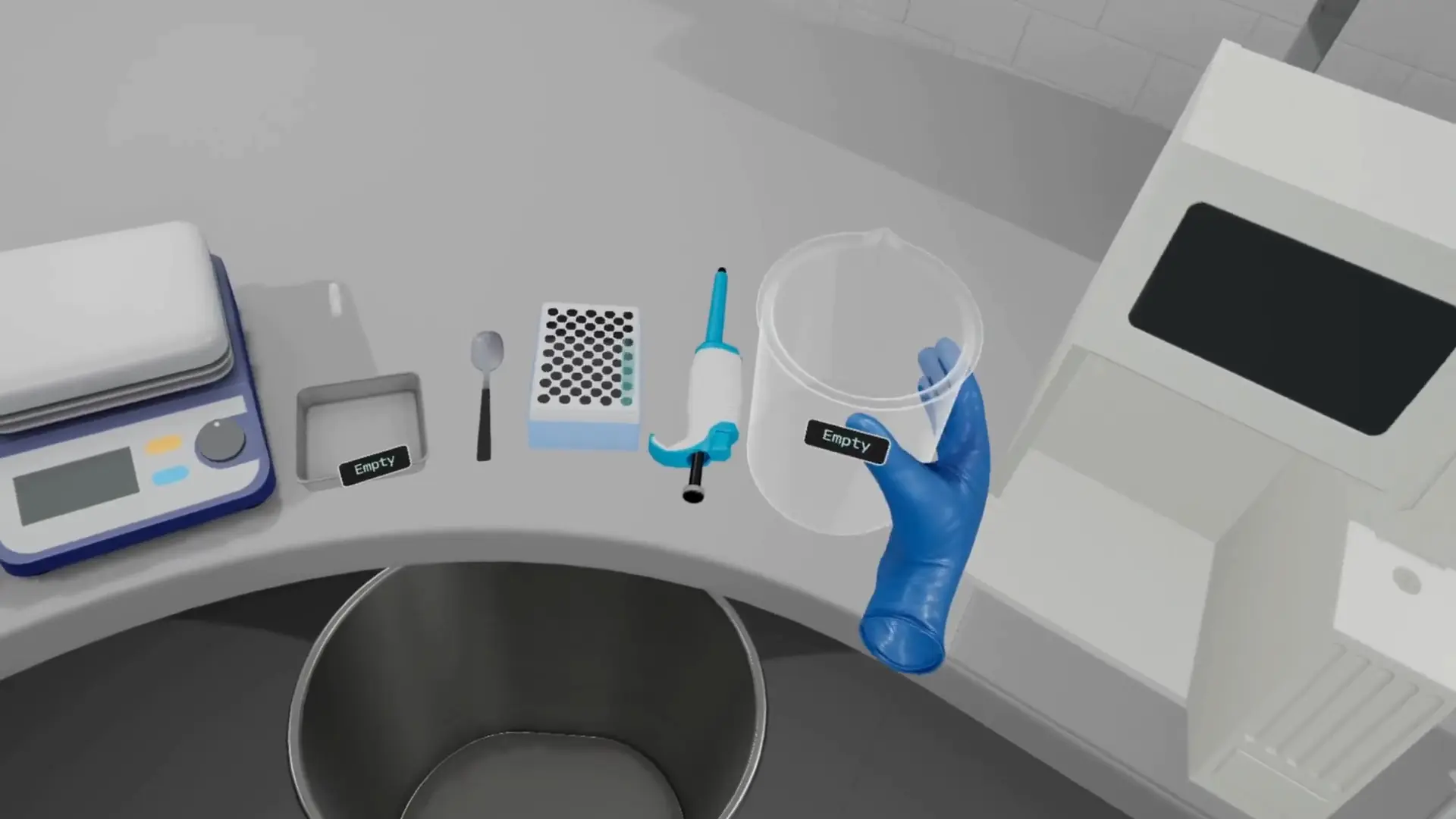
Key points
- Patch clamp electrophysiology is one of the most technically demanding skills in neuroscience — taking months or years to master, with high equipment costs and limited supervised access.
- Our platform introduces trainees to the full wet-lab workflow: from preparing solutions to executing patch clamp technique, in a guided step-by-step VR environment.
- Four core modules — micropipetting, ACSF preparation, intracellular solution preparation, and patch clamp introduction — cover the essential building blocks of electrophysiology research.
- Each module uses step-by-step guidance designed to build confidence and procedural memory before trainees access real equipment and reagents.
- Built for Meta Quest standalone headsets — no PC or specialist hardware required, suitable for self-study before supervised lab sessions.
- Developed to address a genuine gap in accessible, scalable training for a niche, high-cost area of neuroscience research.
Why patch clamp and wet-lab neuroscience training is difficult to scale
Electrophysiology techniques — particularly patch clamp — are among the hardest practical skills to teach in neuroscience. Equipment is expensive, supervised time is scarce, and the skills take significant hands-on repetition to develop. Trainees often arrive at their first supervised session with limited procedural familiarity, making the learning curve steeper and equipment usage less efficient.
High equipment cost
Electrophysiology rigs cost tens of thousands of pounds; limited availability means trainees get few opportunities to practise
Scarce supervised time
Specialist supervisors are in high demand; one-to-one teaching time per trainee is limited and expensive to scale
Slow skill acquisition
Patch clamp technique takes months of repetition — procedural errors early on are common and costly in reagent and tissue terms
Reagent and sample waste
Solution preparation errors waste costly reagents; tissue samples used for practice cannot be reused
VR pre-training allows trainees to complete the procedural steps repeatedly before touching real equipment — arriving at supervised sessions already familiar with the workflow, reducing waste, error rates, and time-to-competency.
Proven in practice
Our VR platforms are used in leading universities
See how Ewha Womans University adopted our VR training platforms into their curriculum and the outcomes they achieved for students and staff.
Platform modules
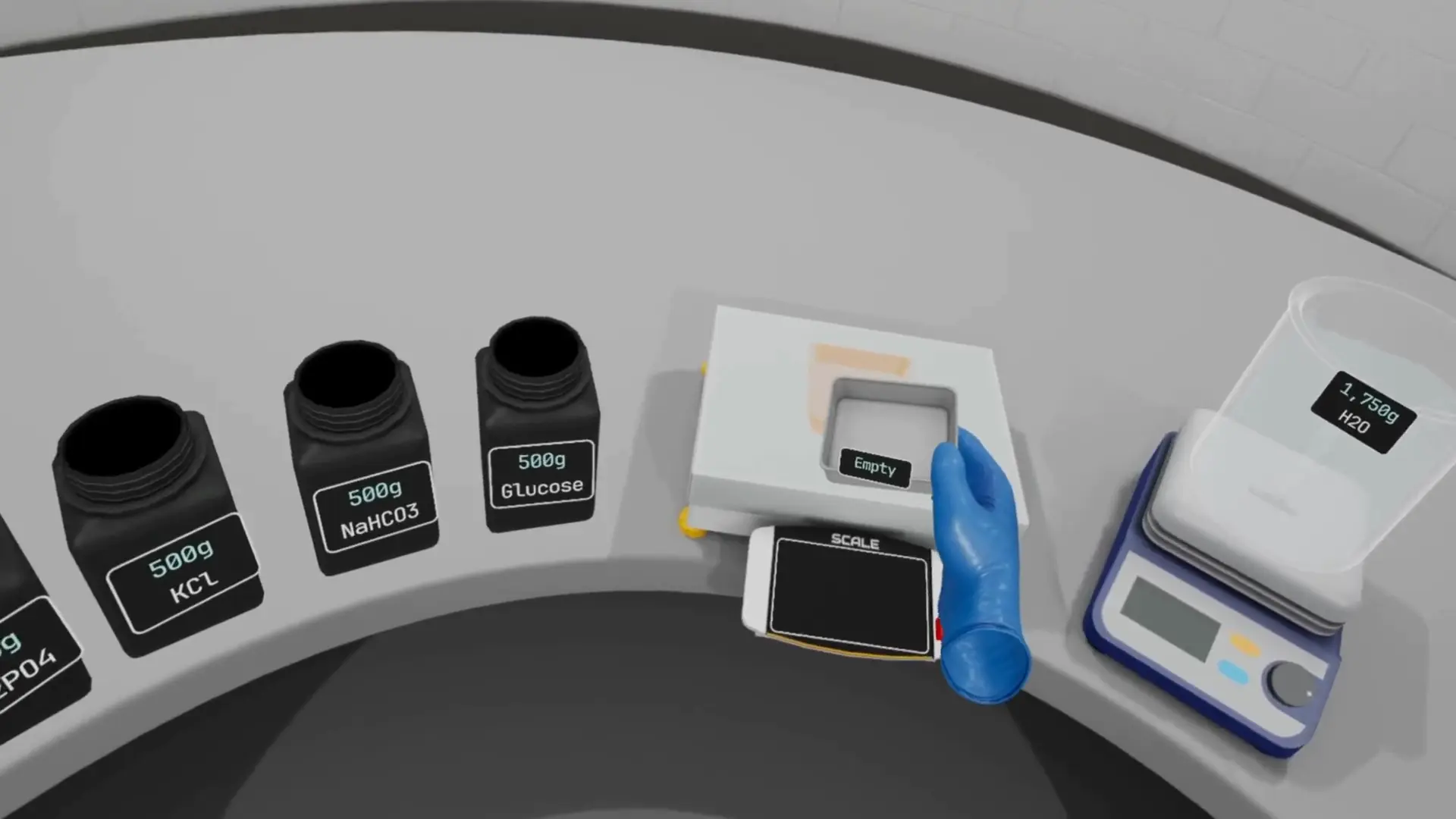
Micropipetting
Develop accurate pipetting technique through guided, repeatable practice — building the muscle memory and precision needed before handling real reagents or tissue samples.
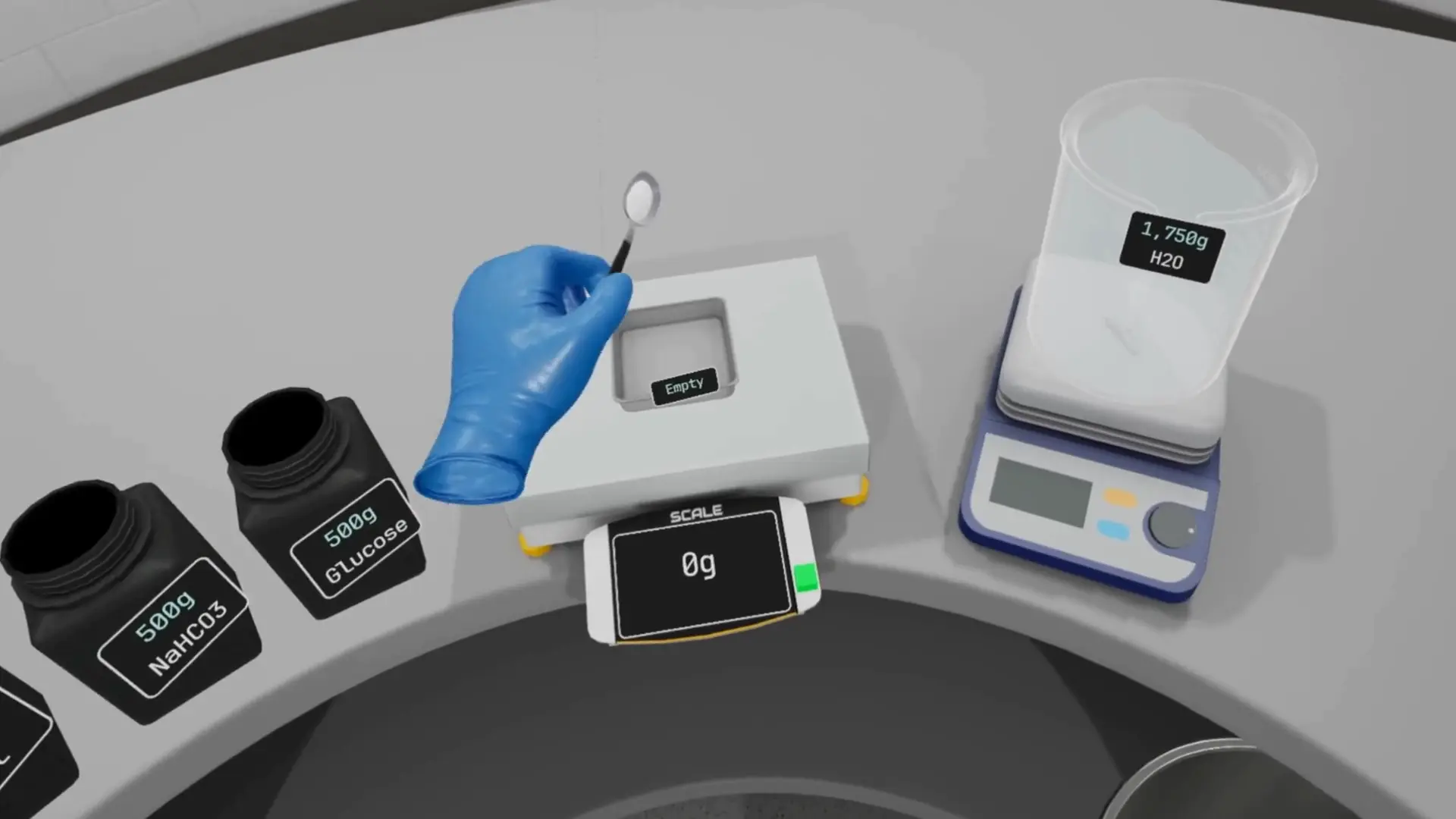
ACSF solution preparation
Learn to prepare Artificial Cerebrospinal Fluid (ACSF) step by step — understanding constituent roles, concentration calculation, and correct mixing procedure in a risk-free environment.
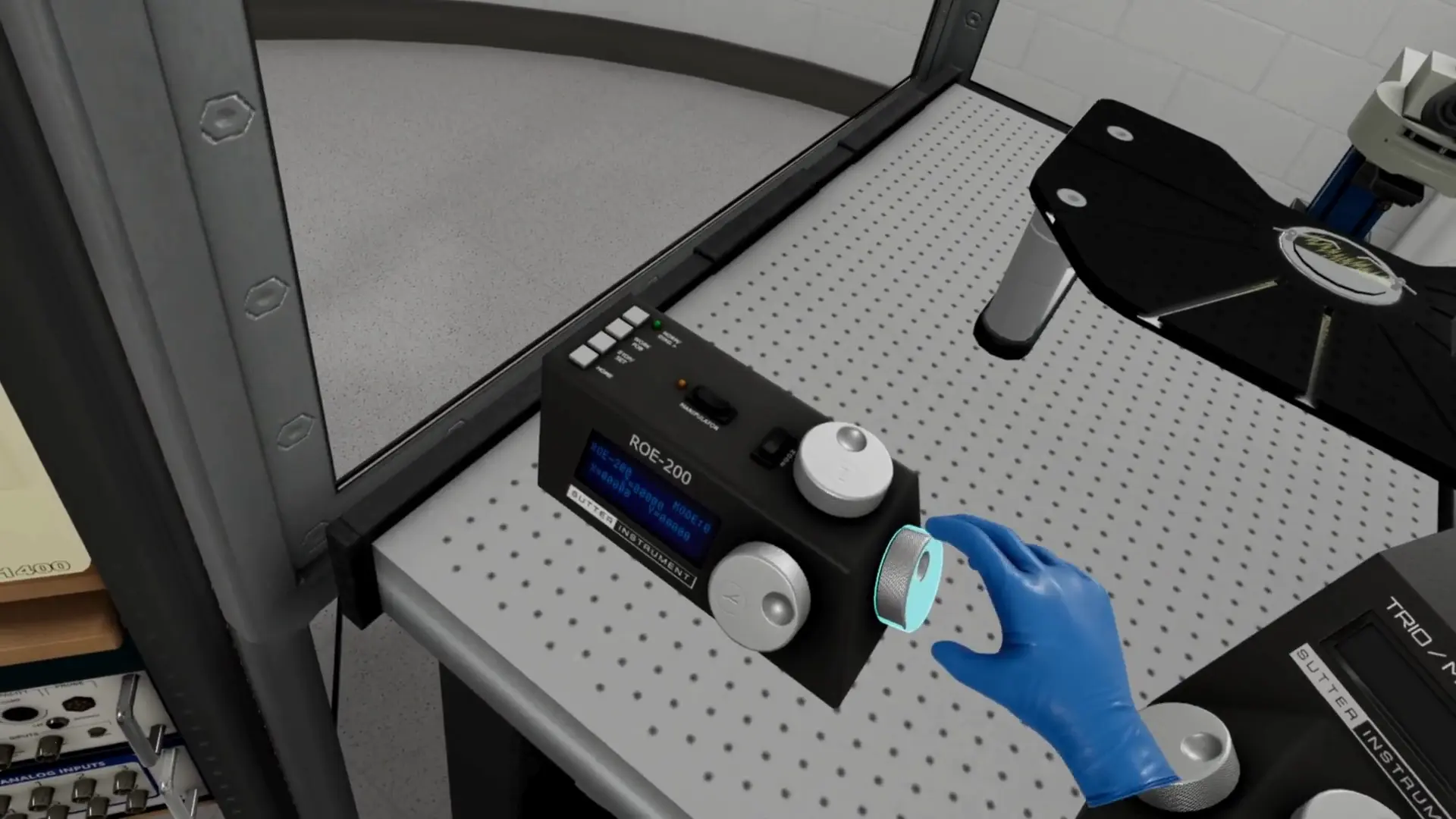
Intracellular solution preparation
Practise preparing intracellular recording solutions with accurate osmolarity and pH targets — developing familiarity with the process before working with costly reagents.
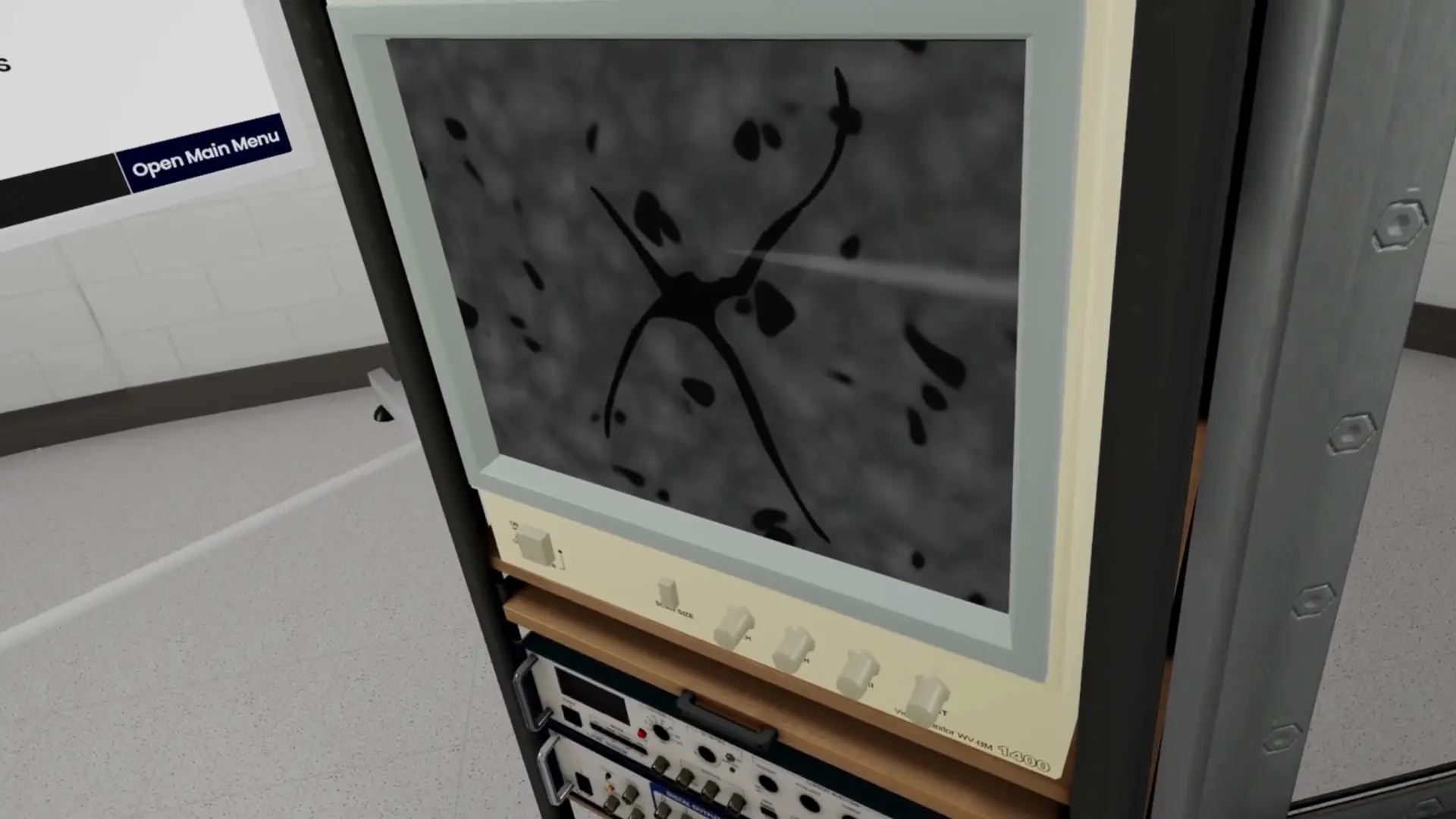
Introduction to patch clamp electrophysiology
Walk through the foundational steps of patch clamp technique — equipment setup, pipette positioning, and gigaseal formation — in an immersive, guided VR environment.
VR pre-training vs. learning on the equipment
Traditional approach
- ✗First experience of procedures is on real equipment and reagents
- ✗Limited repetition opportunities due to cost and access constraints
- ✗High cognitive load when learning technique and theory simultaneously
- ✗Errors waste costly reagents and precious tissue samples
- ✗Supervisor time spent on basic procedural guidance
VR pre-training + supervised sessions
- ✓Unlimited procedural repetition before touching real equipment
- ✓Step-by-step guidance reduces cognitive load during early learning
- ✓Errors have no cost — learners can restart and try again immediately
- ✓Reagent and sample waste significantly reduced
- ✓Supervised sessions focused on refinement, not introduction
Want to bring this to your organisation?
Get in touchWho this platform is for
Designed for any organisation that teaches or trains people in neuroscience research techniques.
Undergraduate neuroscience students
Build procedural familiarity with wet-lab techniques before first supervised practicals.
Postgraduate research students
Prepare for patch clamp and electrophysiology work before accessing expensive rig time.
New lab members
Onboard efficiently with guided training on core solution prep and micropipetting procedures.
University neuroscience departments
Scale practical technique training without proportionally increasing supervisor time or reagent costs.
Research institutes
Standardise introductory training for new staff joining electrophysiology research programmes.
STEM outreach programmes
Introduce sixth-form and undergraduate students to cutting-edge neuroscience techniques in an accessible format.
Building the foundations for electrophysiology research
Patch clamp electrophysiology is a high-value, high-difficulty skill — and the gap between a trainee's first supervised session and genuine competency is often wide. Our platform helps close that gap by giving trainees the opportunity to walk through the full procedural workflow, repeatedly, before they approach the rig.
By arriving at supervised sessions already familiar with the steps, trainees make better use of limited equipment time, waste fewer resources, and progress to competency faster — benefiting both the trainee and the institution.
Get started
Interested in this platform for your programme?
We'd love to discuss how this platform can be customised to your curriculum, cohort size, and teaching objectives.
Contact Us